What Exactly is a Disc Prolapse?
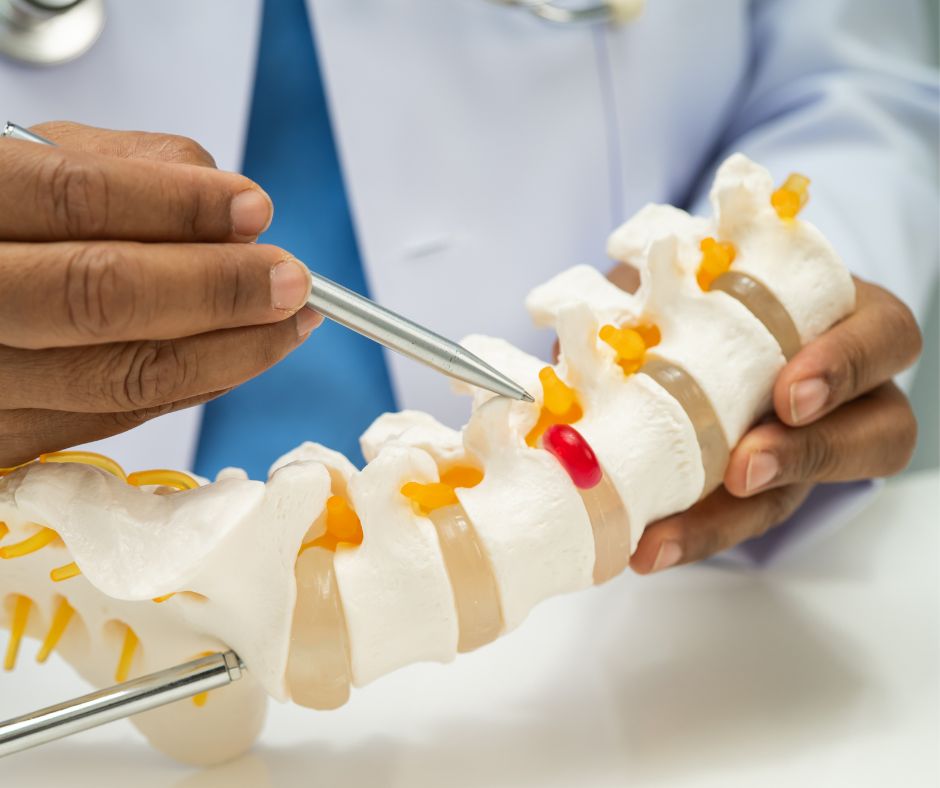
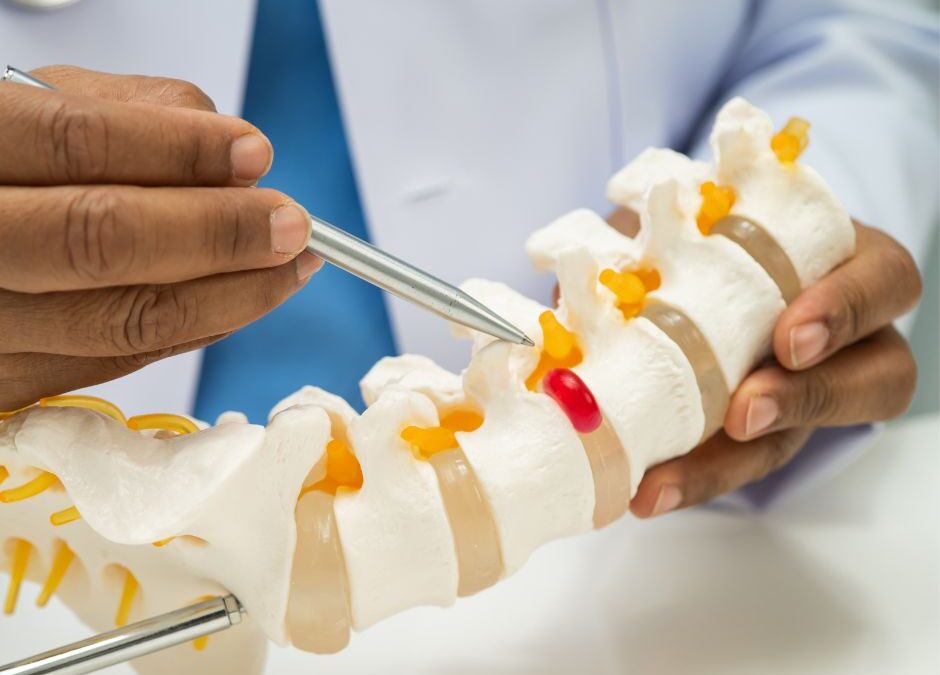
To understand a prolapse, think of your spinal discs as the “shock absorbers” between your vertebrae. They have a tough, fibrous outer layer and a soft, jelly-like centre.
A disc prolapse occurs when a small amount of that soft inner material pushes through a tear in the outer layer. This can cause problems in two ways:
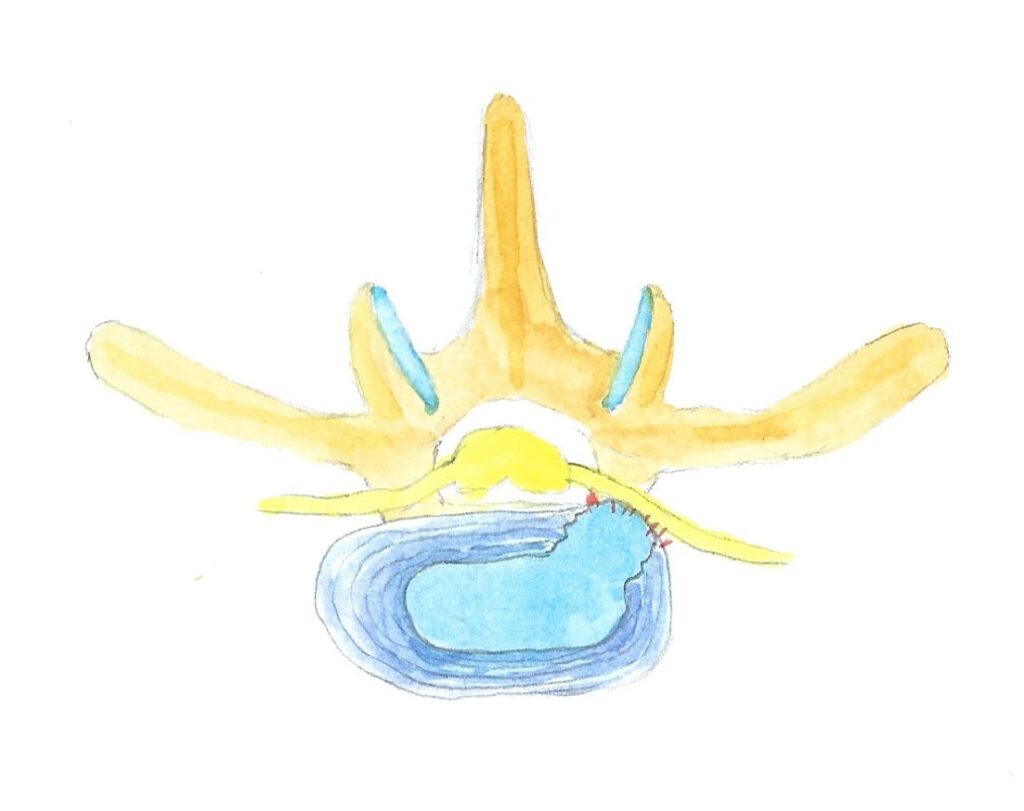
- Chemical Irritation: The “jelly” inside the disc can irritate the nearby nerves causing inflammation and therefore pain.
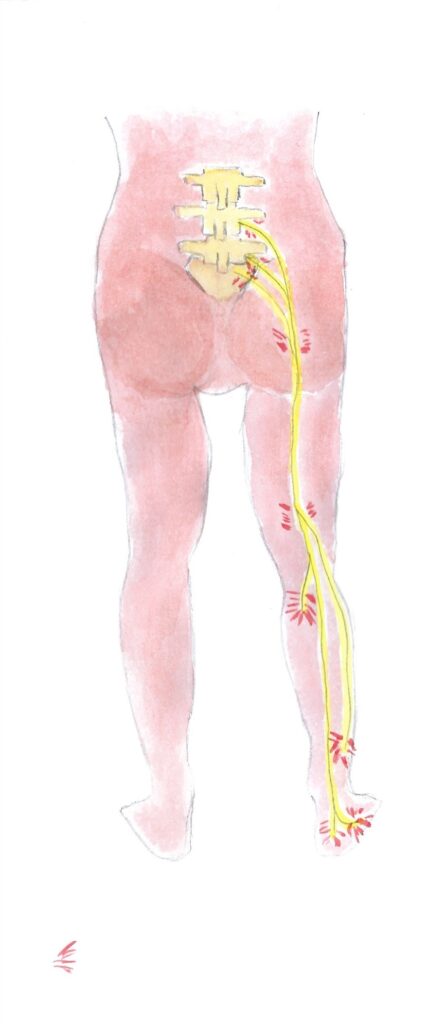
- Physical Pressure: The protrusion can physically press on a nerve root (often the sciatic nerve), leading to the classic “sciatica” symptoms of numbness, tingling, or weakness in the legs due to the pressure on the nerve.
Common Symptoms
- Localised back pain (though sometimes the leg pain is worse than the back pain).
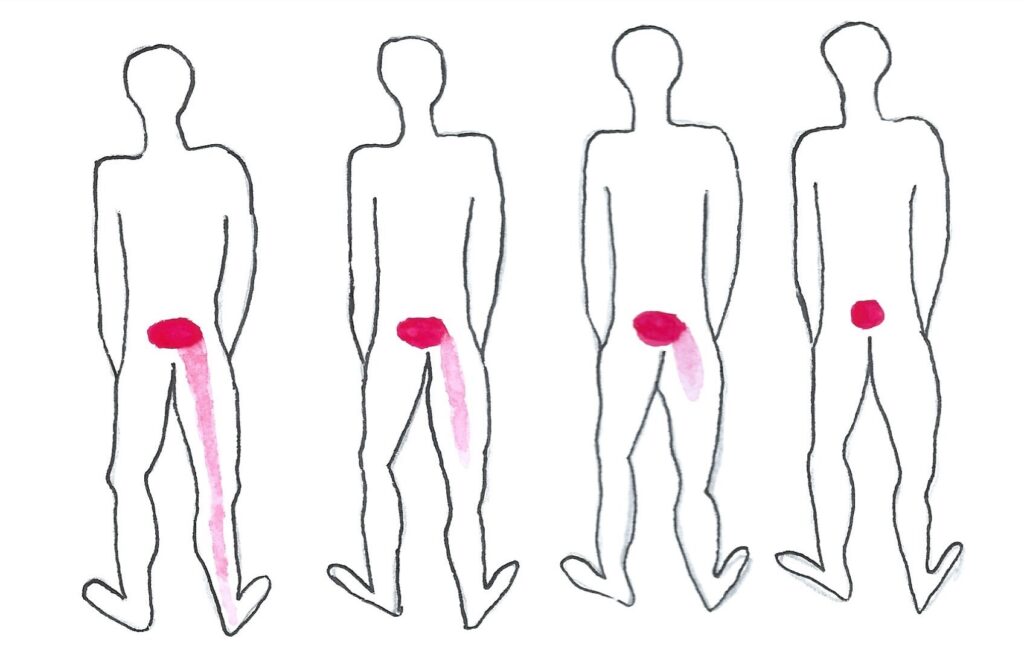
- Sciatica: Sharp, shooting pain traveling down the buttock and leg.
- Pins and needles or numbness in the foot or calf.
- Muscle weakness in specific parts of the leg.
These symptoms could all indicate a disc prolapse but they could also be caused by other issues so a full examination is very important.
How Can Treatment Help?
The good news? The majority of disc prolapses do not require surgery. With the right environment, the body has a natural ability to reabsorb the disc material and heal the tear. Our role at Attend2Health is to facilitate that healing.
1. Expert Diagnosis
Because we offer Chiropractic, Osteopathy, and Physiotherapy all under one roof, we can provide a comprehensive assessment. We test your reflexes, muscle strength, and sensation to pinpoint exactly which nerve level is affected.
2. Reducing Pressure and Pain
Through gentle manual therapy, we work to improve the mechanics of the joints above and below the injured disc. This helps redistribute the mechanical load and can reduce the acute pressure on the irritated nerve. Chiropractors can also use flexion/distraction to help ease the pressure on the disc.
3. Rehabilitation and Pilates
Once the acute pain subsides, movement is medicine. Our Reformer and Mat Pilates instructors work closely with our clinical team to help you build “core” stability. This protects your spine from future episodes by ensuring your muscles are supporting your discs correctly.
4. Knowing When to Refer
Part of our commitment to our 5-star service is knowing when not to treat. If your symptoms suggest that conservative care isn’t enough, we will advise you on the next steps, such as returning to your GP for an MRI or further neurological tests. However it is important an MRI is only undertaken when there are significant findings.
The biggest issue with MRIs is that they are too sensitive. They pick up every tiny lump, bump, and bulge.
Studies have shown that if you take 100 people with no back pain at all and give them an MRI:
- Over 30% of 20-year-olds will have a disc bulge.
- Over 80% of 50-year-olds will have disc degeneration.
These findings are often just “wrinkles on the inside”—normal signs of aging that don’t actually cause pain. When a patient sees these findings on a report, they often begin to “protect” their back, stop moving, and become fearful. This fear-avoidance behaviour is a leading cause of short-term pain turning into a chronic, long-term issue. However if there are hard neurological findings an MRI could be the best way forward.
Don’t Wait in Pain
A disc prolapse can feel like it’s taken over your life, but it doesn’t have to stay that way. With our clinic open 7 days a week and late into the evening, we make it easy to get the help you need when you need it.
Not sure if your back pain is a disc issue? Book a Free Chat at Attend2Health. We’ll help you understand what’s happening in your body and match you with the right practitioner for your recovery.
Call us at 01763 87 80 87 or visit us in Buntingford to start your journey back to health. We are just 15 minutes from Ware, Royston and Baldock.


Leave a Reply
Google Rating
-
I have been attending Pilates Reformer classes with Sarah since January and have been extremely impressed with her constant … More support enabling me to work most effectively on the equipment.
I thoroughly enjoy the class and have seen an improvement in my strength and tone of my body.
I love the aching muscles the next day! 😂 -
I had a very positive experience with Homam Limam. From the first appointment, he was professional, friendly, and took the … More time to understand the issue properly before starting treatment. I noticed a clear improvement almost immediately, and his approach made me feel confident that I was in good hands.
Highly knowledgeable, approachable, and genuinely focused on helping his patients — I would happily recommend Homam to anyone looking for an effective and reassuring chiropractic service. -
First class all round
From the receptionists, to the treatment team and to the owner
The place is incredibly professional, … More welcoming and still has a family feel about the place
I've had plenty of treatments from Oli Towsend and always come away invigorated - excellent
My back and shoulders regularly need some tlc and the team have been superb in getting me back in shape
One thing that also stands out is the way the team talk so positively about the owner of the practice (never met them). They talk so highly of the owners personal standards in looking after the staff, commitment to local charities and support for young up and coming talent and in coaching / mentoring others
So important local companies support our local people.
Great work - and can highly recommend